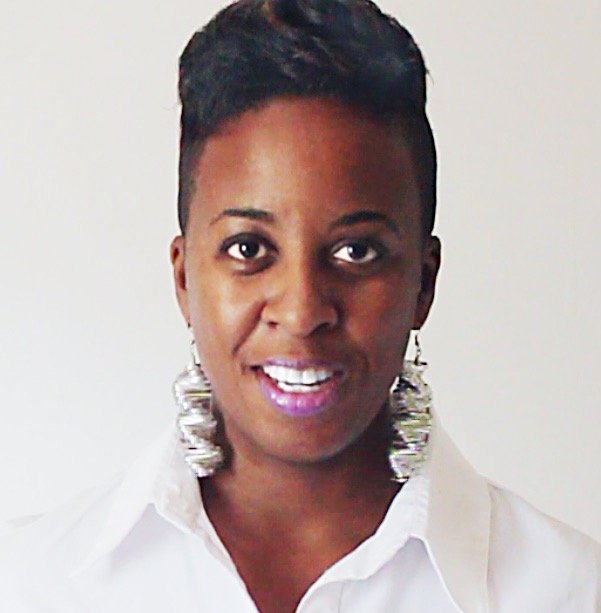
Every system we engineer has a story behind it. This is ours.
THE PHYSICS CLASSROOM
In my senior year of high school my physics teacher told me I would receive a D in his class if I did not earn an A on the next exam.
I studied seriously for the first time and got the A. What I understood afterward was that I had not been failing out of apathy. The material seemed almost too easy to take seriously, so I never engaged with it fully. Once I did, the A's kept coming across my science classes and I could not explain why.
I had always believed my passion was fashion design. I discovered sewing in high school and thought that was my path. But what I was actually drawn to was not the fashion itself, it was the mechanics behind the patterns. The engineering logic inside the creativity. I just did not have the language for it yet.
It took a relative who is an engineer to suggest that maybe engineering was worth exploring in college. When I walked into my first Introduction to Engineering Technology class at an HBCU, something shifted. For the first time in an academic setting I felt understood. My degree is in Electrical Engineering Technology and that foundation shaped everything that followed.
That experience is the reason our STEM programs exist. Because somewhere right now there is a student sitting in a classroom whose gift is invisible to them. Who thinks science is not for them or that engineering belongs to someone else. Who may have been told directly or indirectly that their curiosity about color, chemistry, or manufacturing is not a serious or worthy interest. These programs exist to make that gift visible. For any student. Without exception.
The Industrial Foundation
After college I joined Pepsi as an operations management trainee in 1994 and spent over seven years moving through warehousing, production, and quality control. I treated that plant like it was my own.
I started as a college student doing AutoCAD drafting and redesigning process flows. After graduation I was hired back and continued that work across the entire plant operation. Then I moved into full production and quality control and completed additional process layouts across multiple distribution centers.
At the height of that work I was managing production budgets of over $1,000,000 per week, overseeing eleven technicians, and directing the production of over 20,000,000 cases of product annually at line speeds of 1,500 units per minute inside an FDA-regulated environment. That level of industrial engineering discipline built something in me that I could not have learned any other way.
I had one day a year, Christmas Day, where I knew I could fully rest. Every other day regardless of where I was or what I was doing I carried responsibility for the health of everyone in the region who consumed our product. That accountability forged a standard for quality, documentation, and process integrity that now runs through every system we engineer.
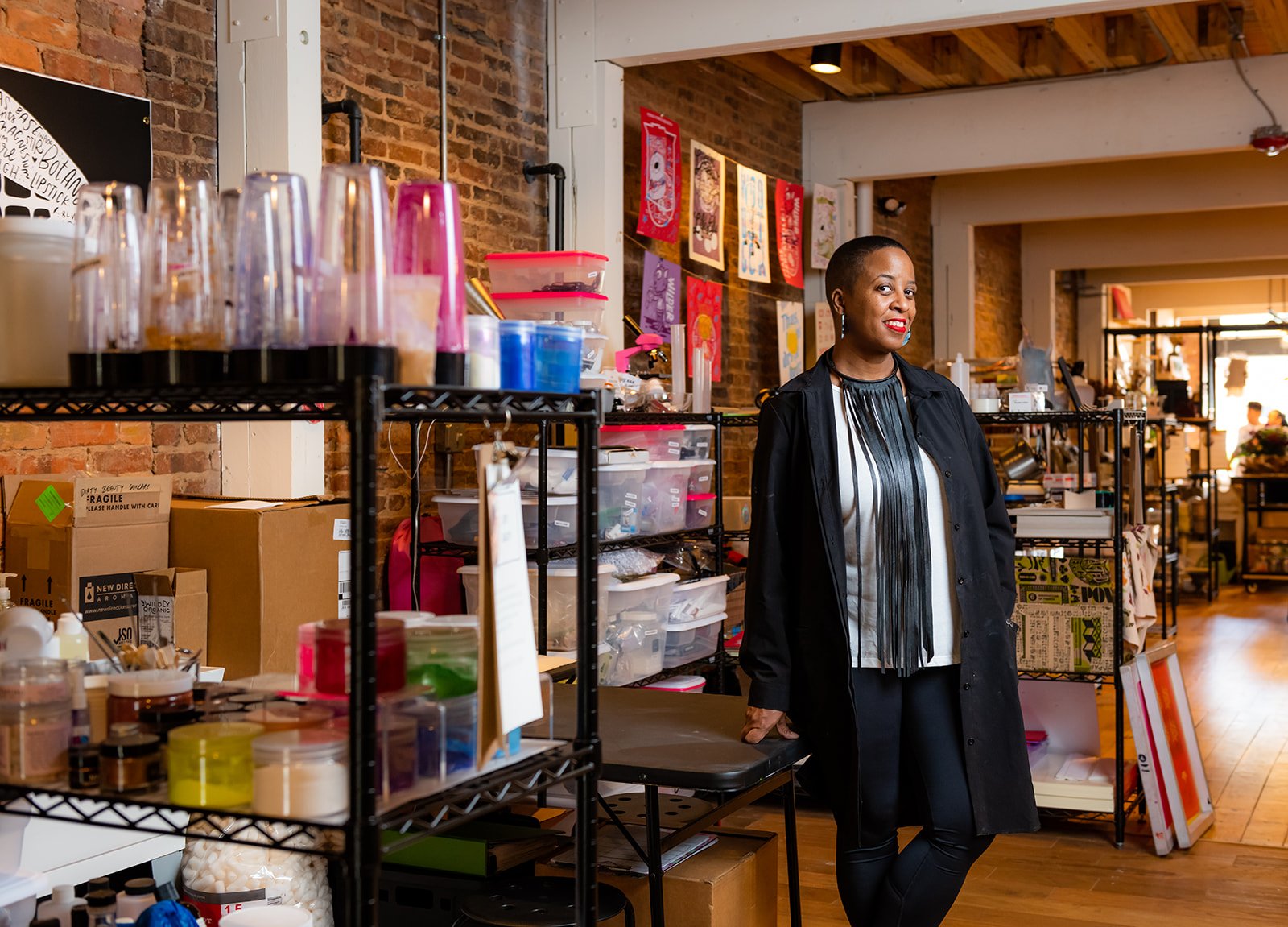
When I eventually left to build something of my own I began with AutoCAD contract work and then moved into cosmetics — an industry I loved and one that succeeds on the kind of engineering discipline I had spent years developing. I developed formulas using ingredients from a working farmland, managing raw agricultural inputs, formulation control, and production logistics without industrial sized infrastructure. I needed to know if it could be done correctly at nonindustrial scale.
It could. But only with the right systems.
What that process produced was not just a product line. It produced documented methodologies, tested formulations, and a structured production model that could be demonstrated, transferred, and replicated by others. The Dirty Beauty brand became the proving ground for what is now the 4D Engineering licensing portfolio.
September 11, 2001
On September 11, 2001 I was at work in project management, the only woman in the department, while my children were at their daycare center across the city.
When the news broke and the uncertainty of that day set in I asked my supervisor if I could leave to pick up my children and bring them home.
He said he could not authorize that.
I never forgot that moment. Not out of bitterness, but because it clarified something permanently. I had spent years being the person who treated every employer's operation like my own. Who never cost a company a dime. Who always saved far more than my salary. Who left systems behind that organizations are still running decades later. And in the moment that mattered most personally I needed someone else's permission to take care of my family.
I decided that day that I would build something I owned completely. Not just a business — a structure where my time, my priorities, and my presence with the people who matter most to me would never again require authorization from anyone.
That decision is the spirit behind everything we license. When we help an operator build their own manufacturing enterprise we are not just transferring a formula or a methodology. We are transferring the ability to say this is mine. I built this. I own this process and this enterprise. And nobody tells me I cannot go take care of what matters.
If that resonates with you, you are exactly who we built this for.
What We Have Built
4D Engineering exists because 30 years of manufacturing experience, cosmetic formulation, and science education needed a structure worthy of it.
The systems we license are the result of all of it — every production run, every formula, every student, every entrepreneur we have helped move from idea to ownership. They are not concepts. They are not approximations. They are proven systems built by someone who has been doing this work longer than most people in this space have known it existed.
Four disciplines. One system.
Design that competes at any scale. Development built on 30+ years of proven formulation. Documentation that makes compliance structural rather than optional. Distribution readiness built into every methodology from the first batch forward.
When all four are present nothing is missing. That is what every system we engineer delivers.
Ready to explore what licensing looks like for your operation or your program? Start with our manufacturing system overview or reach out directly.